780-934-3506
 24/7 Emergency Response


Why first-snowfall prep matters here
Edmonton winters start with wet snow that turns hard overnight, then stretch into deep cold where rock salt stops working. The first storm of the season is when people usually find the weak spots: a blocked downspout, a shovel that broke last March, or a sidewalk that freezes into a sheet before anyone gets outside.
A short prep pass in September or early October takes less time than one bad morning of slipping on the front path.
Walk the property before snow arrives
Do this on a dry day while you can still see the ground.
- Mark low spots where meltwater sits. Those become ice sheets after a thaw-freeze cycle.
- Clear leaves from walks, the driveway apron, and catch basins. Wet leaves under snow are slick and they clog drains.
- Check downspouts and eavestroughs so water is not dumping onto the main walk.
- Note trip hazards: raised sidewalk panels, loose mats, garden hoses still out, kids' toys by the steps.
- If you have heated mats or cable, test them now, not at midnight in a storm.
Sidewalks and Bylaw 14600
Under City of Edmonton Bylaw 14600, owners and occupants are expected to keep sidewalks adjacent to their property clear of all snow and ice as soon as possible. Tickets often sit around $100, and the City can hire a contractor and send you the invoice if the walk stays unsafe.
Plan who clears the walk after an overnight dump: you, a neighbour sharing the corner lot, or a contractor on a trigger. Waiting until after work in January is how sheets of ice get packed in.
Tools, melt, and sand
Stage gear where you can grab it without digging first.
- A sturdy shovel or two, plus a push shovel for longer drives
- Ice scraper or ice chipper for stubborn patches
- Bagged ice melt rated for cold temperatures (many blends lose punch well above Edmonton's deepest cold)
- Sand or grit for traction when it is too cold for melt to work
- Gloves, boots with tread, and a headlamp for early starts
Salt alone is a weak plan once temperatures drop hard. Keep sand on hand for traction and save melt for the temperature window where it still dissolves ice. More detail is in our guide to ice melt vs sand vs salt in Edmonton.
Driveway and parking
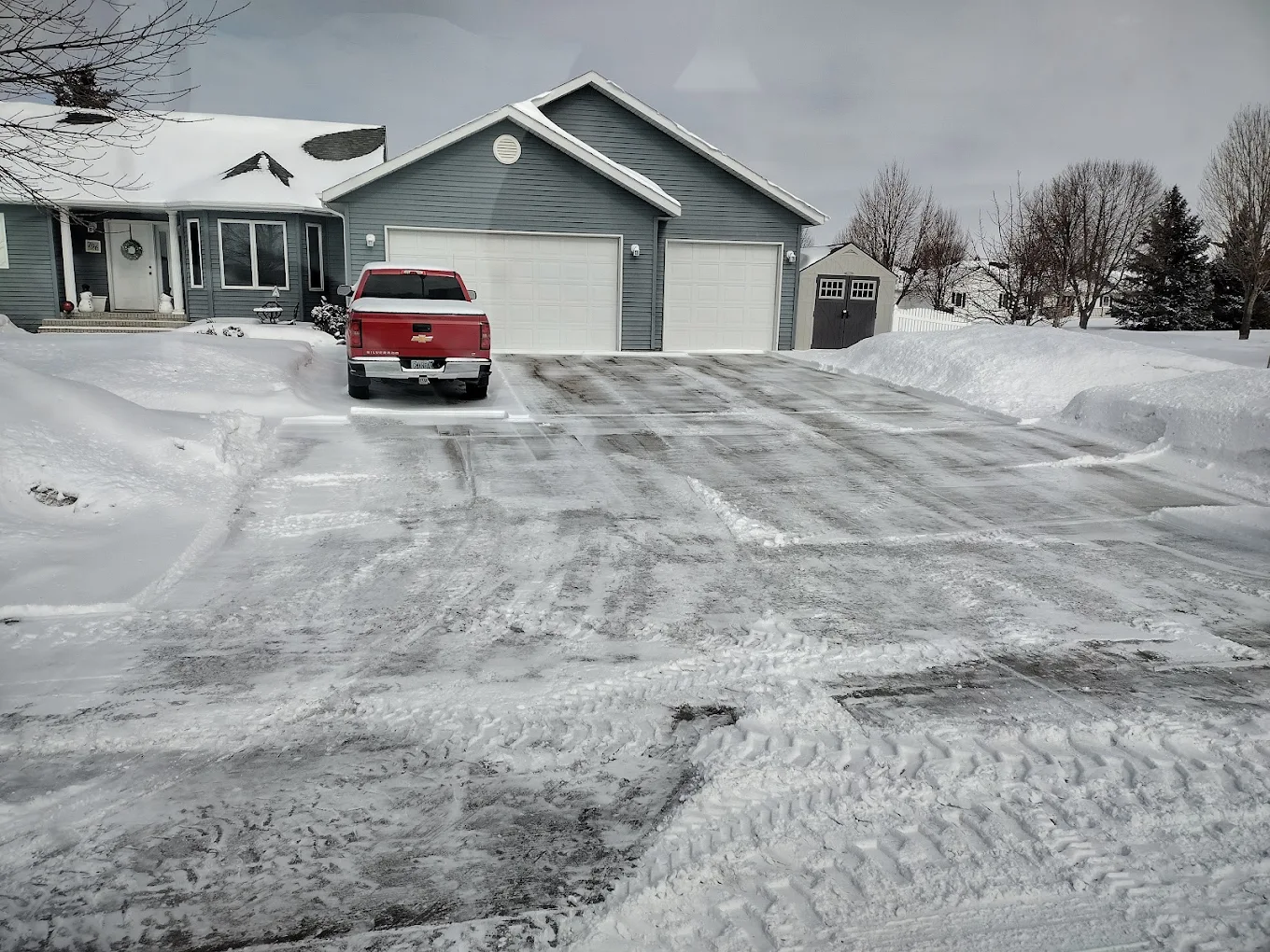
Decide where piles go before the first storm. Pushing snow against the garage door, over a basement window well, or onto the sidewalk creates problems you will fight all season.
If street parking is tight after ploughs go through, clear a path wide enough for your vehicle and leave a clean apron so you are not spinning on ice at the curb. For recurring overnight clearing, residential snow removal on a centimetre trigger keeps the morning routine predictable.
When to call for help
Plenty of homeowners handle light snow themselves. Call sooner if:
- You cannot safely clear after heavy overnight storms
- Ice on steps or the sidewalk keeps coming back after melt
- You travel for work and need someone on a trigger while you are away
- Banks from the street plough keep burying your end of the drive
Snowbear answers 24/7 at 780-934-3506. You can also request a quote before the season starts.